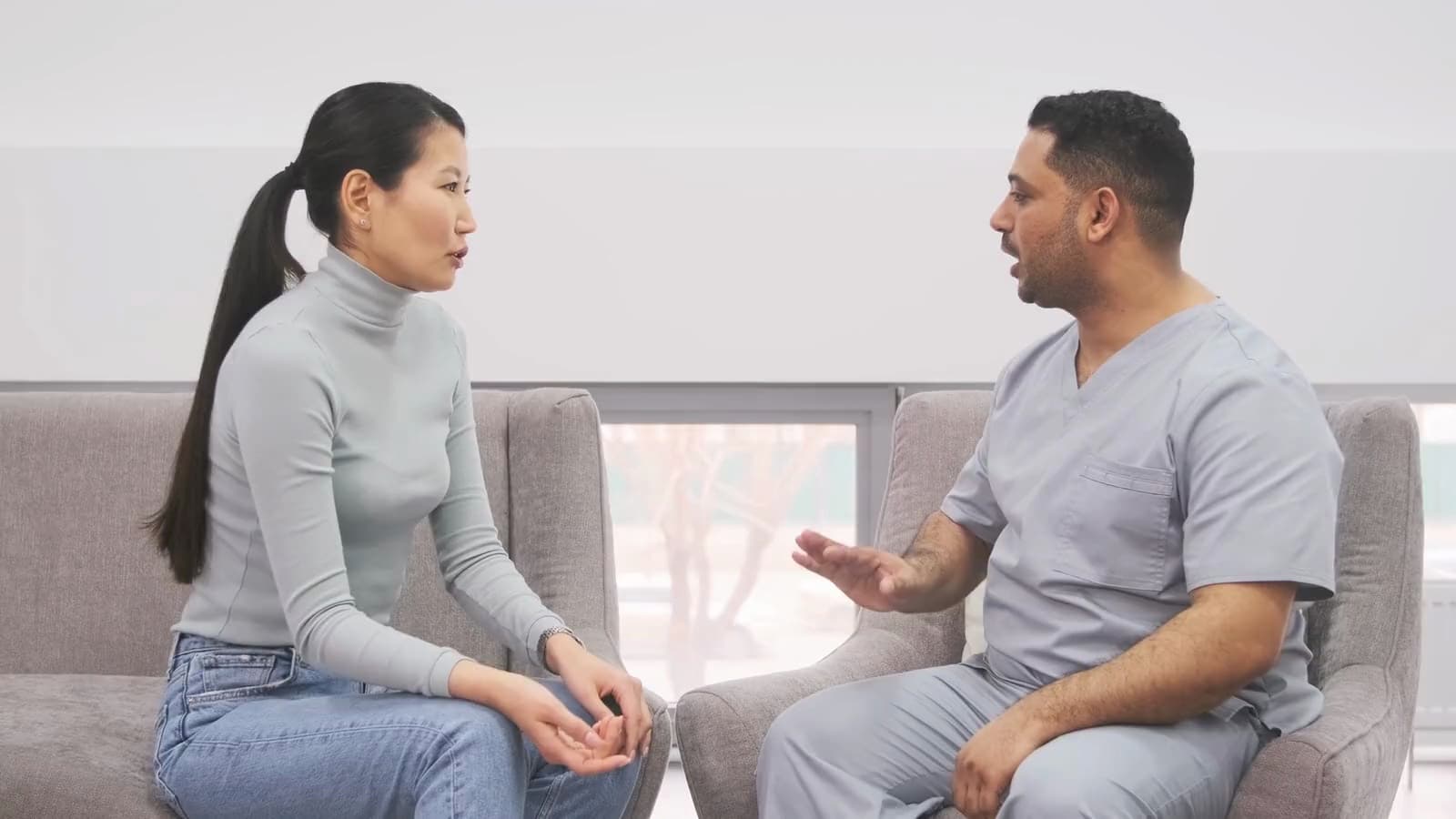
More time for care.
You see the patient. mutim drafts the note, the orders and the claim for you to review and sign.
Disconnected workflows add work to every patient visit.
Manual clinical tasks. Writing notes, entering orders, selecting codes and completing follow-up consume clinicians’ time.
The consultation becomes the note and the orders.
- Structured clinical notes
- Specialty and custom templates
- Orders captured for review
- Patient
My right knee has hurt for 6 weeks, since I twisted it.
- Doctor
McMurray test is positive on the right.
- Doctor
Have you had any physiotherapy?
- Patient
4 weeks of physiotherapy. It has not helped much.
- Doctor
I am ordering an MRI of the knee.
- History
- Right knee pain for 6 weeks after a twisting injury.
- Examination
- McMurray test positive.
- Treatment so far
- Completed 4 weeks of physiotherapy with little improvement.
- Plan
- MRI of the right knee.
The clinician reviews and approves the note and the captured orders.
Scattered clinical information. Finding the patient’s history and the relevant clinical evidence means searching across separate tools.
The record and the evidence, in one place.
- Pre-visit review
- Ask mutim
- Evidence-based actions
What has the patient tried for the knee so far?
Four weeks of physiotherapy, with little improvement.
4 weeks of physiotherapy. It has not helped much.
From the recordToday’s consultation When is an MRI advised for a suspected meniscal tear?
Under 50, the Dutch knee arthroscopy guideline advises an MRI alongside the history and examination, unless an injury inside the joint is already highly likely.
Perform an MRI in addition to history and physical examination in patients younger than 50 years, unless there is a high a priori chance of intra-articular injury.
From the evidenceVan Arkel et al., Dutch Guideline on Knee Arthroscopy Part 1, Acta Orthop 2021 (CC BY 4.0)
The clinician reviews the evidence and decides the care plan.
Complex payer requirements. Payer complexity creates extra work for physicians and raises the risk of delays and denials.
From clinical documentation to claim readiness.
- Coding support
- Clinical documentation improvement
- Prior authorization
Right knee pain for 6 weeks after a twisting injury. McMurray test positive. Assessment: tear of the medial meniscus. Plan: MRI of the right knee without contrast.
- Active on the date of service
- Coded to the last character
- Side stated in the note
- A sentence behind every code
Nothing is submitted until a named person has reviewed it.
Supporting every step of the patient visit
Before the visit
- Patient summaryKey history, medications, results and previous visits.
- Care gapsOutstanding care and follow-up needs, highlighted.
During the visit
- Capture encounterClinical notes generated from the conversation.
- DictationSpoken input turned into structured documentation.
- Clinical decision supportRelevant evidence surfaced during the consultation.
- AskEvidence-based answers from trusted clinical sources, informed by the patient’s context.
After the visit
- Order stagingOrders prepared for the physician to review.
- Coding and CDICodes suggested and documentation gaps flagged.
- Patient instructionsClear guidance, treatment instructions and next steps.
- Prior authorizationRequirements checked, supporting documents prepared, requests submitted and tracked.
What this category has reported
Results another ambient documentation vendor has published with its customers. mutim has no results of its own to report yet.
83%less note-writing effort, reported by clinicians at Sharp HealthCare in a survey before and after a pilot of Abridge.
Abridge press release, 10 April 202555%lower burnout rate at Riverside Health after a two-month pilot of Abridge, measured with the Mini‑Z survey.
Abridge case study, Riverside HealthReported by another vendor. Not mutim results.
Privacy, security and clinical oversight
Planned safeguards across mutim’s ambient and clinical intelligence workflow.
Saudi data residency and privacy
Saudi-hosted processing and storage, with clear patient notices and defined retention for recordings, transcripts and clinical data.
Security across the workflow
Encryption in transit and at rest, role-based access and audit trails, from the conversation to the clinical output.
Compliance and data governance
Controls mapped to the Saudi PDPL, HIPAA and applicable NCA requirements, with explicit limits on using patient data to train AI.
Clinicians remain in control
Clinicians review generated notes, coding suggestions and proposed orders, and oversee clinical decision support.
- NPHIES
- ICD-10-AM
- SBS V3
- CHI rules